Echo, Vascular and Nuclear
Accreditation and Education

Author name: Judith Buckland, MBA, RDCS, FASE

Continuous diagnostic learning in cardiovascular imaging connecting echocardiography, education, quality improvement, and patient care

Continuous Diagnostic Learning: What If Every Echocardiogram Made the Next One Better?

Every echocardiogram has the potential to teach us something—but too often, those lessons end with the report. Explore CardioServ’s vision for continuous diagnostic learning and discover how connecting education, quality improvement, and real-world clinical practice could transform the future of cardiovascular imaging.

Continuous Diagnostic Learning: What If Every Echocardiogram Made the Next One Better? Read More »

High-performing echo lab, continuous diagnostic quality

What Makes a High-Performing Echo Lab?

What separates a high-performing echo lab from one that simply meets accreditation standards? The answer isn’t better equipment or more protocols—it’s building a system that continuously learns. Discover how leading cardiovascular imaging programs use feedback, education, and continuous improvement to strengthen diagnostic quality and improve patient care.

What Makes a High-Performing Echo Lab? Read More »

Technical and interpretive peer review improve echocardiography quality and support IAC accreditation.

Technical and Interpretive Peer Review: Why Both Matter in Echocardiography Quality Improvement

Quality improvement in echocardiography is often associated with accreditation. While accreditation is an important milestone, its greatest value lies in what happens between accreditation cycles. A meaningful quality improvement program helps laboratories continually improve image acquisition, interpretation, reporting, and ultimately patient care. The Intersocietal Accreditation Commission (IAC) recognizes this by requiring accredited echocardiography laboratories to

Technical and Interpretive Peer Review: Why Both Matter in Echocardiography Quality Improvement Read More »

From Validation to Guidance: The Next Evolution of AI in Cardiovascular Imaging

Artificial intelligence has become one of the most discussed topics in cardiovascular imaging. Much of the conversation has focused on whether AI can automate measurements, improve efficiency, or assist with interpretation. Those are important questions, but they may no longer be the most interesting ones. Recently, I had the opportunity to participate as a co-author

From Validation to Guidance: The Next Evolution of AI in Cardiovascular Imaging Read More »

cardioserv welcomes angie burns

CardioServ Welcomes Angela Burns, MS, ACS, RCS as Director of Clinical Operations

At CardioServ, we’ve always believed that great cardiovascular imaging programs are built by great people. That’s why we’re excited to welcome Angela Burns, MS, ACS, RCS, as our new Director of Clinical Operations. Angie brings nearly two decades of experience in cardiovascular imaging, sonographer education, quality improvement, accreditation, and clinical leadership. Throughout her career, she

CardioServ Welcomes Angela Burns, MS, ACS, RCS as Director of Clinical Operations Read More »

Echo AI validation

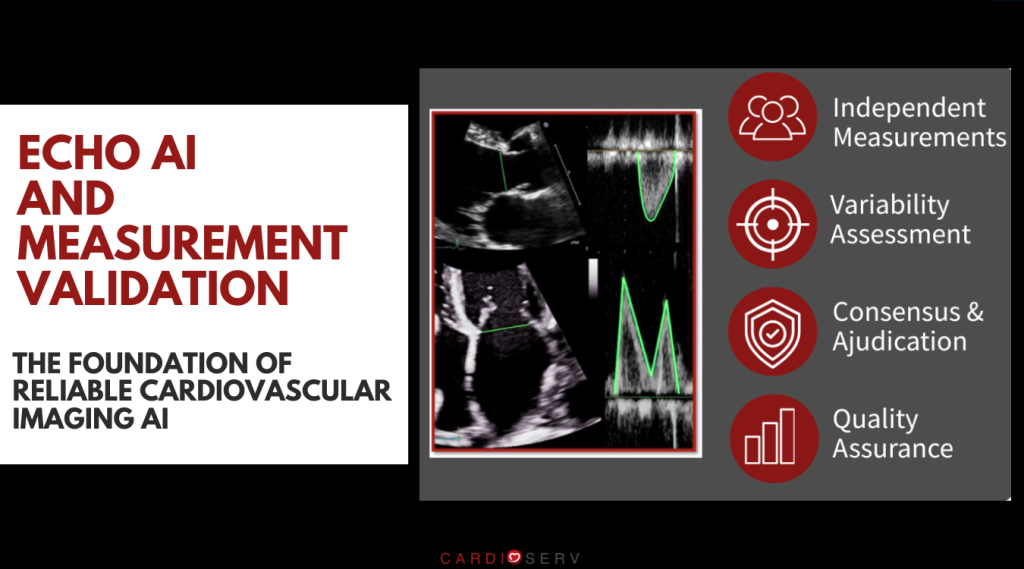
Echo AI and Measurement Validation: The Foundation of Reliable Cardiovascular Imaging AI

Artificial intelligence is rapidly reshaping cardiovascular imaging, particularly in echocardiography. While much of the industry conversation focuses on automation, workflow efficiency, and algorithm performance, far less attention is given to one of the most important factors behind reliable AI development: echo measurement validation.

Echo AI and Measurement Validation: The Foundation of Reliable Cardiovascular Imaging AI Read More »

where to measure pulmonary A wave

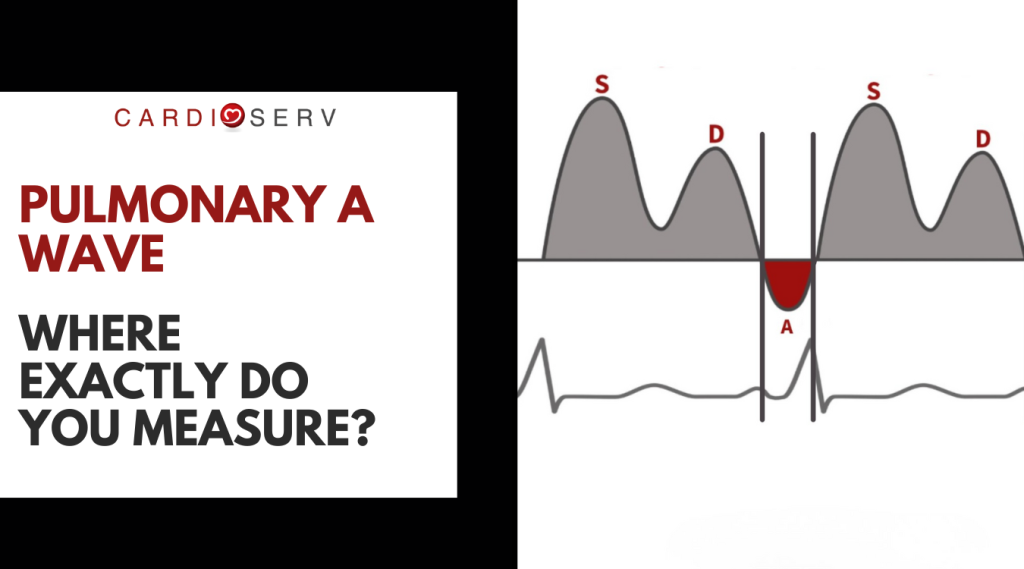
Pulmonary Veins: Where Exactly Do You Measure the A Wave and AR Duration?

A common questions we’ve received since the rollout of updated diastolic function protocols is about pulmonary venous Doppler — specifically: “Are the A wave and AR duration measured before the S wave or after the D wave? I’ve seen it shown both ways, and I’m getting conflicting explanations.” If you’ve asked this yourself, you’re not

Pulmonary Veins: Where Exactly Do You Measure the A Wave and AR Duration? Read More »

2025 year in review cardioserv

CardioServ 2025 Year in Review: Advancing Quality, Innovation, and Better Outcomes

As we reflect on the past year, one theme stands out clearly: progress with purpose. From supporting accreditation success across the country to advancing AI research and laying the groundwork for the future of cardiovascular education, 2025 marked an important chapter in CardioServ’s evolution. Our mission remains unchanged—helping cardiovascular programs achieve excellence through better education,

CardioServ 2025 Year in Review: Advancing Quality, Innovation, and Better Outcomes Read More »

rv pa coupling uncoupling

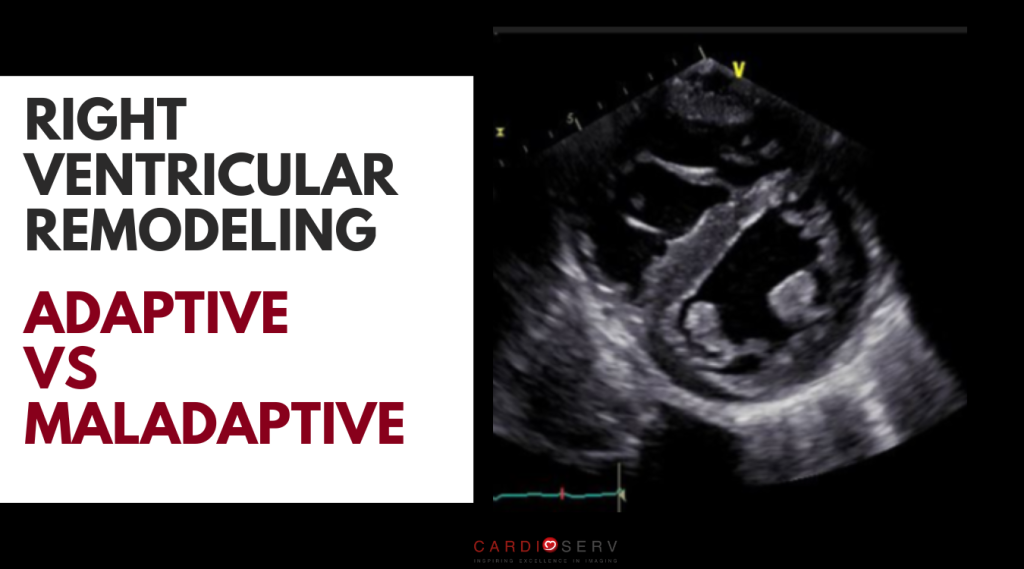
The Easy Way to Understand RV–PA Coupling and Uncoupling

The concept of RV–PA coupling and uncoupling can sound intimidating, but it’s really about how well the right ventricle (RV) and the pulmonary arteries “work together”.

Coupling is the measure of teamwork between the right ventricle and the pulmonary circulation—how efficiently the RV converts its contraction into blood flow through the lungs.

The Easy Way to Understand RV–PA Coupling and Uncoupling Read More »

Scroll to Top