Last Updated on May 26, 2026 by Don Gerig, RDCS
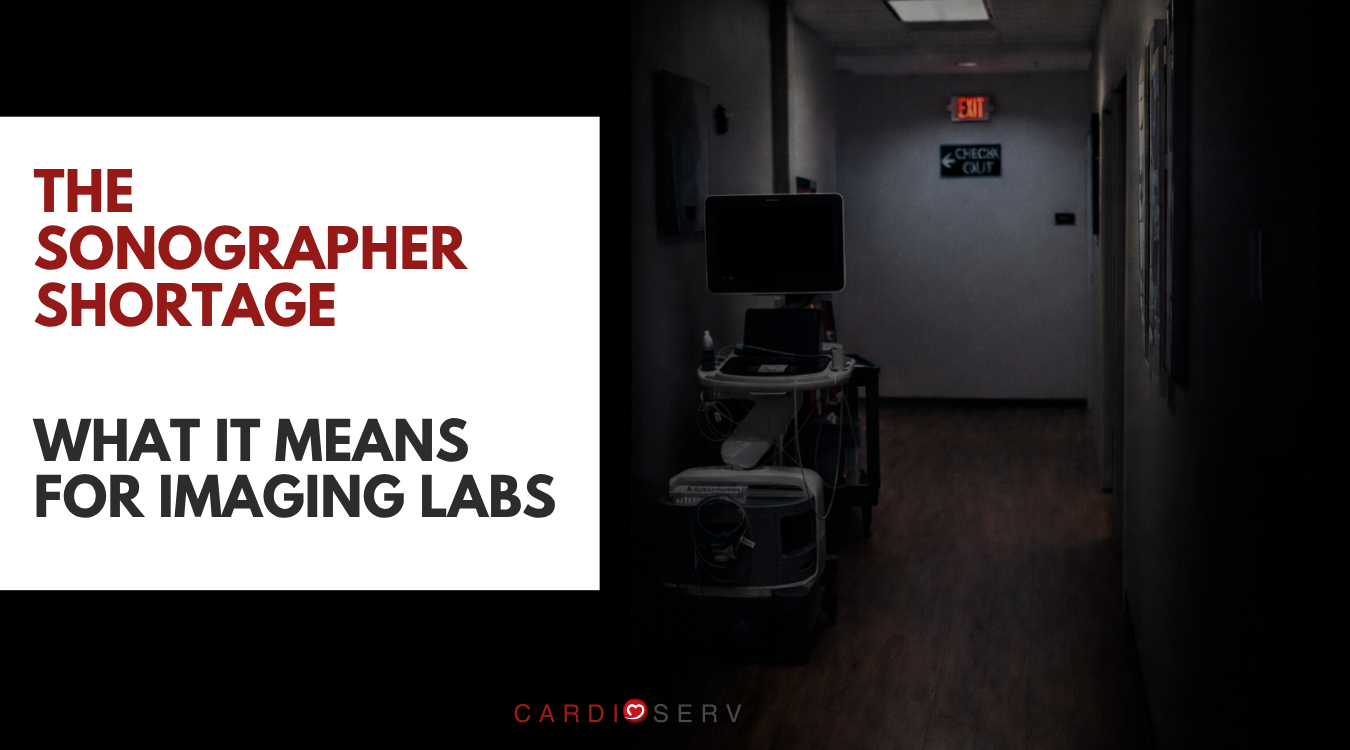
Across the United States, and around the world, one issue is becoming increasingly difficult for imaging labs to ignore: the shortage of qualified sonographers.
While many departments have felt this operationally for years, recent workforce data now confirms what labs are experiencing every day: persistent staffing shortages, rising vacancy rates, increasing workloads, and growing pressure on throughput.
For cardiovascular imaging teams, this is more than a staffing problem.
It has a direct effect on patient access, scheduling backlogs, sonographer burnout, and ultimately the quality and timeliness of a patient’s overall care.
Let’s take a closer look at what the current data shows and what it means for the future of echocardiography and vascular ultrasound.
A Growing Workforce Shortage
Cardiovascular sonographers are classified within the broader category of diagnostic medical sonographers, which makes cardiac and vascular specific national data somewhat difficult to isolate.
Even so, the broader sonography workforce data provides a clear signal.
According to national workforce reporting, sonography vacancy rates rose sharply from 6.9% in 2021 to 16.7% in 2023, before improving slightly to 12.4% in 2025.
That means vacancy rates more than doubled, and while there has been some recovery, vacancy rates remain well above historical norms.
In practical terms, many labs are still operating with persistent open positions and ongoing recruitment challenges.
Why This Matters for Your Imaging Department
Echocardiography and vascular ultrasound are highly operator dependent.
Unlike many automated diagnostic testing modalities, these depend heavily on:
- image acquisition skill
- Doppler accuracy
- clinical recognition
- reproducible measurements
- sonographer judgment
When staffing becomes thin, the effects are immediate.
Labs may experience:
- longer patient wait times
- reduced appointment availability
- increased overtime
- more on-call burden
- heavier daily scan volumes
- greater reliance on travelers and new graduates
This can quickly create a cycle where staffing shortages increase workload, and increased workload worsens retention.
Burnout and Retention Are Major Drivers
Workforce shortages are not only driven by demand. They’re also driven by retention challenges.
Recent research has found that more than half of sonographers reported moderate-to-severe burnout, with strong associations to:
- fewer breaks
- lower supervisor support
- full-time workload strain
- longer work hours
- lower job satisfaction
This is highly relevant to echo and vascular imaging departments.
These imaging modalities are physically demanding.
Repetitive shoulder positioning, sustained postures, technically difficult body habitus, and high-volume schedules all contribute to cumulative strain.
Work-related musculoskeletal injury remains a major factor in early career attrition.
The Hidden Impact on Patient Care
Perhaps the most important issue is what this means for patients.
When labs are understaffed, delays in diagnostic imaging can directly affect clinical decision-making.
This may mean slower access to:
- heart failure assessment
- valvular disease evaluation
- Stroke and TIA workup
- EF surveillance
- AAA screening and surveillance
- DVT evaluation
- Dialysis access and graft surveillance studies
Staffing shortages directly contribute to longer scheduling backlogs and delayed ultrasound examinations. In healthcare, delays matter as timely ultrasounds help drive treatment decisions.
How Labs Are Responding
Here’s a look at how many organizations nationwide are already adapting.
1. Increased use of travel sonographers
Many labs are relying on travelers to maintain throughput and reduce scheduling backlogs. While this can provide short-term relief, it often comes with higher labor costs, onboarding challenges, and variable continuity from one contract period to the next. In some cases, even with the use of travelers, facilities still struggle to maintain appropriate staffing levels.
2. “Grow-your-own” workforce models
Some health systems are investing in internal training pipelines, school partnerships, and cross-training programs to build a more sustainable long-term workforce. These models help reduce dependence on external hiring and can strengthen retention by creating clear professional growth pathways.
3. AI and workflow support
AI-assisted acquisition, automated measurements, and workflow support tools are increasingly being explored as capacity multipliers.
AI tools can help reduce repetitive measurement tasks, improve consistency, and allow sonographers to focus more time on image quality, clinical recognition, and complex studies.
Importantly, these tools should be viewed as capacity multipliers, not replacements for sonographers.
The Operational Challenge Beyond Patient Care
The impact of staffing shortages extends beyond patient scheduling and scan volumes.
It also affects the operational work required to maintain a high-quality cardiovascular imaging lab.
For many facilities, accreditation and quality initiatives require a sonographer to be pulled from the scanning schedule for dedicated administrative time each week or month.
In a fully staffed lab, this can already be difficult.
In an environment with persistent staffing shortages, removing a sonographer from patient-facing time can place even greater strain on the schedule.
This often creates a difficult choice: protect operational quality or maintain patient throughput.
The reality is that both are essential.
This is an area where outside accreditation support and workflow guidance can help reduce the burden on internal staff while keeping the lab aligned with accreditation standards and quality expectations.
The Growing Dilemma Facing Imaging Labs
Perhaps the most challenging reality is that this shortage is occurring at the same time demand for cardiovascular imaging continues to rise.
Research and market projections consistently show significant growth in cardiovascular ultrasound over the coming years, driven by an aging population, increasing cardiovascular disease burden, and greater reliance on noninvasive imaging.
This creates a difficult dilemma for imaging departments.
For many departments, this is no longer a temporary staffing issue, but a longer-term operational and quality challenge.
On one hand, patient demand and study volumes are expected to continue growing.
On the other, many labs are already operating with persistent vacancies, recruitment challenges, and burnout-related retention issues.
In other words, the need for echocardiography and vascular ultrasound is increasing faster than the available workforce in many regions.
This raises an important question for leadership teams:
How do we continue to grow access and maintain quality when staffing remains constrained?
This is why workforce development, retention, workflow optimization, and accreditation support are becoming increasingly important.
Where Do We Go From Here?
The sonographer shortage is unlikely to be solved by a single intervention. This is a systems issue.
Long-term improvement will likely require a combination of:
- stronger training pipelines
- improved retention
- ergonomic support
- better staffing models
- leadership support
- workflow optimization
- technology augmentation
For echo and vascular labs, this is also a reminder that quality and workforce sustainability go hand in hand.
Protecting sonographers protects patient care.
Final Thoughts
The sonographer shortage is something that’s being felt every day in imaging labs across the country.
As demand for cardiovascular imaging continues to grow, supporting the professionals who make that care possible has never been more important.
For lab leadership, sonographers, and educators alike, this is an opportunity to rethink how we build sustainable, high-quality echocardiography services for the future.
Where CardioServ Fits In
As labs respond to staffing shortages, the challenge shifts from maintaining volume to maintaining consistency, training, and quality at scale.
CardioServ is expanding solutions to support this, including:
- a hospital-based ultrasound diploma program with a path to credentialing
- AI-enabled quality improvement tools to standardize measurements and provide feedback
- integrated training and QI workflows for both new and experienced sonographers
These solutions are designed to help labs grow capacity without increasing internal burden.
Need Help Supporting Your Lab Through Staffing Shortages?
CardioServ supports echo and vascular labs with:
- Accreditation support
- Workflow optimization
- Quality improvement programs
We are also developing workforce and AI-driven solutions to support long-term scalability.
If your lab is navigating staffing challenges or evaluating new approaches to training, quality, or workflow:

Don Gerig, RDCS, Medical Education Manager
Connect on LinkedIn